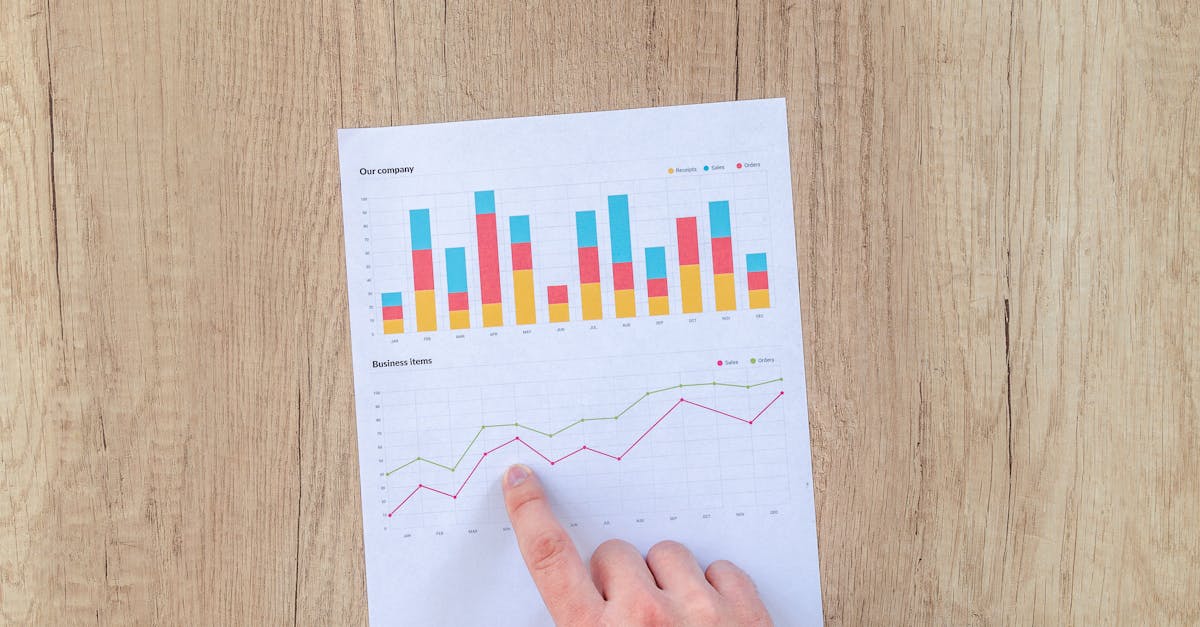
Small businesses can utilize data analytics to drive growth by enhancing decision-making and optimizing marketing strategies, according to the 2023 Analytics Growth Report.
Key Takeaways
- Data-driven companies are 5 times more likely to make faster decisions than competitors, according to a 2023 Harvard Business Review study.
- Utilizing multi-touch attribution models can improve marketing ROI by over 20% for small businesses, according to a recent report from Hootsuite.
- By implementing Google Analytics 4, small businesses can derive actionable insights from customer behavior data, enhancing user engagement and retention.
- Businesses employing data analytics strategies report an average revenue increase of 12% year-over-year, as noted in a report by McKinsey.
- Companies with strong analytics capabilities have the potential to increase their profitability by up to 30%, highlighting the critical role data plays in driving financial success.
- Implementing regular data analytics training can significantly boost a company's ability to leverage data, making teams more adaptable to market changes and customer preferences.
Short Answer
By leveraging tools like Google Analytics 4 and employing marketing attribution models, small businesses can analyze customer behavior effectively, leading to informed decision-making and improved ROI. For instance, businesses applying multi-touch attribution can increase their marketing effectiveness by measuring customer journeys across various touchpoints. This detailed analysis not only optimizes marketing strategies but also provides insights for product development and customer experience enhancement.
Deep Dive
Data analytics offers small businesses a significant opportunity to identify potential growth strategies. To begin, they can implement basic analytics tools such as Google Analytics 4, which provides comprehensive reports about user behaviors and actions on their websites. This tool helps businesses track essential metrics like user acquisition, engagement rates, and conversion rates. For example, in 2022, small businesses that followed analytics guidelines reported a 15% improvement in user engagement, showcasing the power of targeted tracking.
Moreover, employing multi-touch attribution models enables small businesses to understand better which marketing channels effectively drive customer interactions and conversions. According to the Hootsuite 2023 report, companies that adopted multi-touch attribution models reported a 22% increase in marketing return on investment (ROI). This method allows businesses to allocate their marketing budget efficiently by focusing on channels that yield better results. Additionally, precise attribution helps in eliminating inefficiencies in marketing spend, thereby ensuring that every dollar is well-invested.
Furthermore, small businesses can benefit from customer segmentation analysis. By analyzing customer demographics and behaviors, businesses can tailor their marketing messages to specific audience segments, enhancing the relevance and impact of their campaigns. Businesses using segmentation strategies have witnessed an average revenue increase of up to 10%, according to an October 2022 study by the European Business Review. This segmentation can also extend to personalized offerings, which, as a study from Epsilon noted, boosts engagement by up to 80% among targeted consumers.
Additionally, the insights derived from data analytics can inform product development and customer service decisions. Small businesses can track customer feedback and trends through data analytics tools, allowing them to make informed adjustments to their offerings. For instance, analyzing online reviews and feedback can help businesses identify common pain points that, when addressed, enhance customer satisfaction and loyalty, leading to increased repeat purchases. According to Zendesk, 87% of consumers in 2023 are willing to change brands if they experience poor customer service, emphasizing the necessity of leveraging data to meet customer expectations effectively.
Comparison
| Analytics Tool | Key Features | Best Suited For | Cost |
|---|---|---|---|
| Google Analytics 4 | Event-based tracking, cross-device reporting | Understanding user behavior on websites | Free |
| Tableau | Data visualization, business intelligence reporting | Visualizing complex data sets | Starting at $70/month |
| Hootsuite | Social media analytics, ROI tracking | Social media strategy optimization | Starting at $19/month |
| HubSpot | Marketing automation, analytics dashboard | Inbound marketing and lead tracking | Free to $3,600/year |
| Sisense | Customized analytics, embedded BI tools | Companies needing in-depth insights | Contact for pricing |
Common Misconceptions
One common misconception is that data analytics is only for larger corporations. In reality, small businesses can leverage affordable tools like Google Analytics 4 and Hootsuite to gain valuable insights without significant financial investments. These platforms are designed with usability in mind, enabling small business owners to make data-driven decisions effectively. In fact, according to a 2023 report by Deloitte, 64% of small businesses successfully achieve growth by integrating analytics into their decision-making processes.
Another misconception is that data analytics requires extensive technical expertise. While having data specialists can be beneficial, many modern analytics tools offer user-friendly interfaces and templated reports that allow small business owners to glean insights without needing advanced analytical skills. Training resources and community forums further support the learning process, enabling broader accessibility. Furthermore, companies using data analytics tools that provide training materials often see a 40% improvement in their teams' confidence levels when analyzing data.
What's Next
Small businesses should consider investing in data literacy training, helping their teams understand data analytics principles and applications better. As the digital landscape evolves, staying updated on analytics trends will be crucial. Using advanced analytics for predictive modeling, small businesses can anticipate customer needs and trends, enhancing their competitive edge. A recent study by Forrester Research indicates that 61% of organizations that implement predictive analytics gain a substantial advantage in forecasting trends effectively.
Furthermore, incorporating machine learning algorithms into their data analytics strategies can lead to even more dynamic decision-making capabilities, as outlined in a 2023 report from Forrester Research. AI-driven analytics tools can uncover patterns from vast data sets that would have been nearly impossible for humans to discern, allowing small businesses to pivot quickly to changing market conditions and customer preferences.
Implications for Small Business Growth
The implications of integrating data analytics into small business strategies are profound. By employing data analytics, small businesses not only enhance operational efficiency but also increase their market competitiveness. Recent findings from a survey conducted by the National Small Business Association indicate that businesses utilizing data analytics are 25% more likely to experience significant growth compared to those that do not. This statistically significant correlation suggests that small businesses should prioritize data analytics to sustain and enhance their relevance in increasingly saturated markets.
Moreover, customer trust and loyalty can also be cultivated through data transparency, as businesses can use analytics to tailor communications and offers based on individual customer behavior. The trend towards personalized marketing is not merely a preference but a growing expectation among customers; a 2023 report from McKinsey found that 71% of consumers desire personalized interactions, reinforcing the urgency for small businesses to embrace data analytics not only for operational success but also for fostering strong customer relationships.